There's nothing quite like getting a motorcycle exhaust tuned to match the bike — and the rider. Whether it's a rumbling V-twin, a punchy L-twin, or a screaming inline-four, the exhaust note is close to the heartbeat of the machine. Done properly, it turns an ordinary ride into something you actually feel. Here's what's genuinely true about performance, tuning, and staying legal while you chase that sound.
Every engine has a voice
Tuning an exhaust isn't just about making noise — it's about shaping the voice of the engine to suit how you ride.
- V-twins & L-twins: a good upgrade accentuates that low-frequency, rhythmic thump — a muscular, authoritative presence at idle and low RPM.
- Inline-fours: a properly tuned system unlocks a smooth, high-pitched wail that builds toward redline.
- The feel of it: that auditory feedback connects you to what the bike's actually doing underneath you — throttle inputs feel more intuitive, and the whole ride gets more engaging.
Do you actually need a tune?
A common myth is that any exhaust change demands an immediate, expensive ECU remap. That's not always true.
- Plug-and-play systems: a correctly matched, well-engineered exhaust built specifically for your bike's stock parameters can perform well straight out of the box — no custom tune required.
- The real power step-up: pairing a pipe with an intake upgrade and a dedicated tune is where the bigger gains show up — optimising the air-fuel ratio, unlocking more usable power, and smoothing out flat spots in the delivery.
Know the rules before you cut anything
This is the part most guides gloss over, and it's the part that actually matters if you want to keep riding your bike on the road without hassle.
What actually applies in WA
- Motorcycles built after 1 March 1984 are subject to a noise limit of 94 dB(A) under Australian Design Rule 83/00.
- WA has a real enforcement path for this: if your bike's flagged for excessive noise, the Department of Transport can require a stationary noise test from an Authorised Noise Level Assessor, following the national test procedure, before it's confirmed compliant at an Authorised Inspection Station.
- Removing a factory-fitted catalytic converter is treated as tampering with emissions equipment and creates real compliance risk — including failed inspections and voided warranties. Penalties vary and we won't put a specific figure here that we can't verify for WA, but the risk is real, not theoretical.
The practical path for a street-legal bike: keep the cat, and either fit a quality system engineered to stay under your bike's noise limit, or have one properly built and tested. That gets you the tone and the gains without the risk.
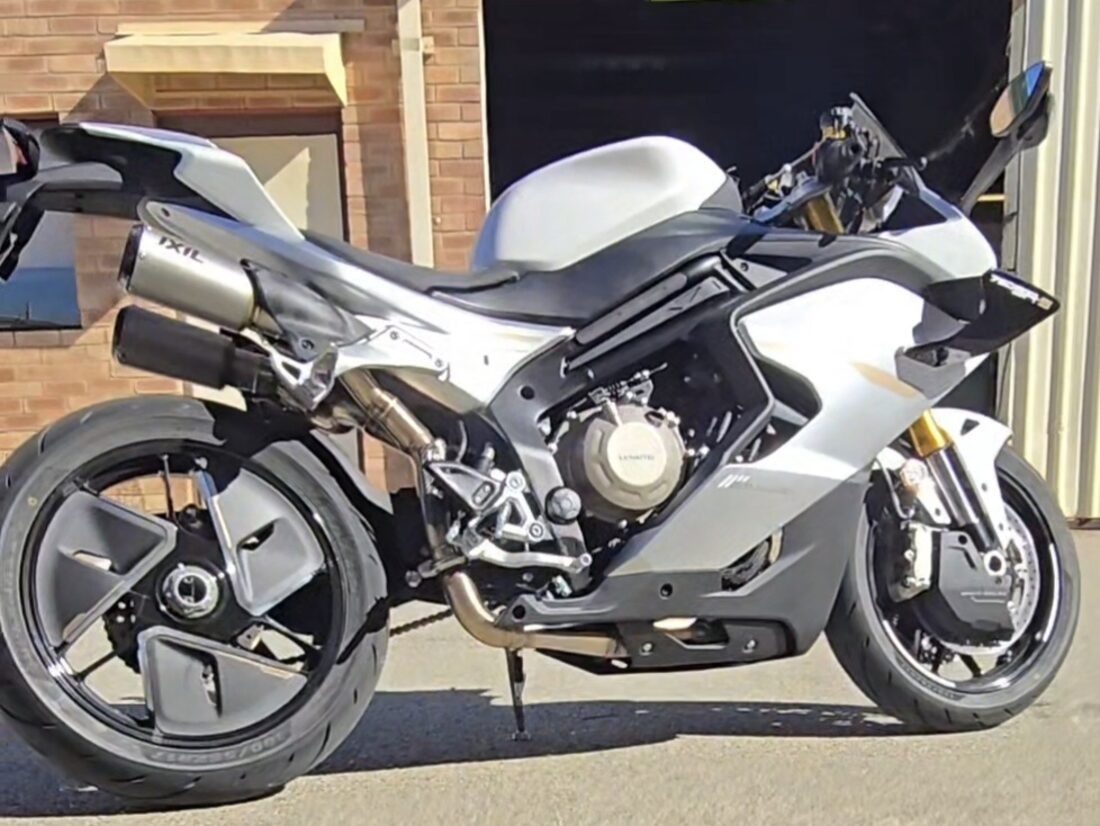
A real project: custom taper for a 2026 CFMoto 750SR-S
The problem
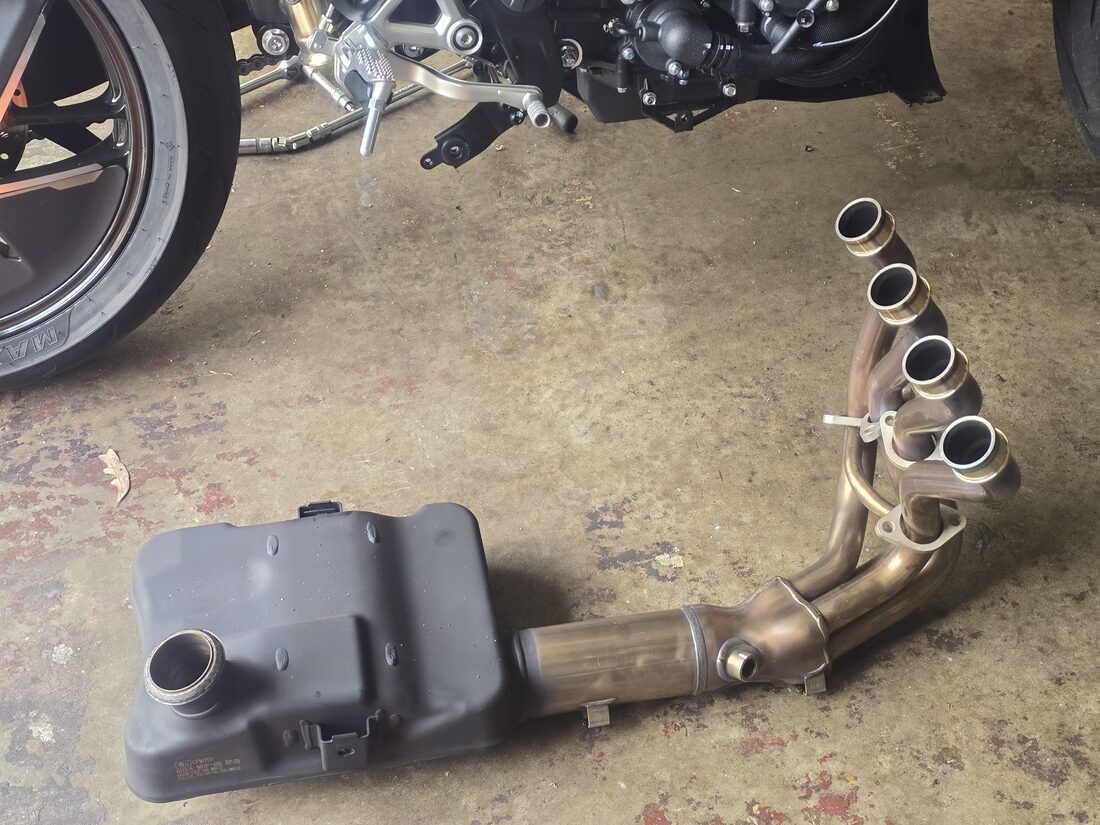
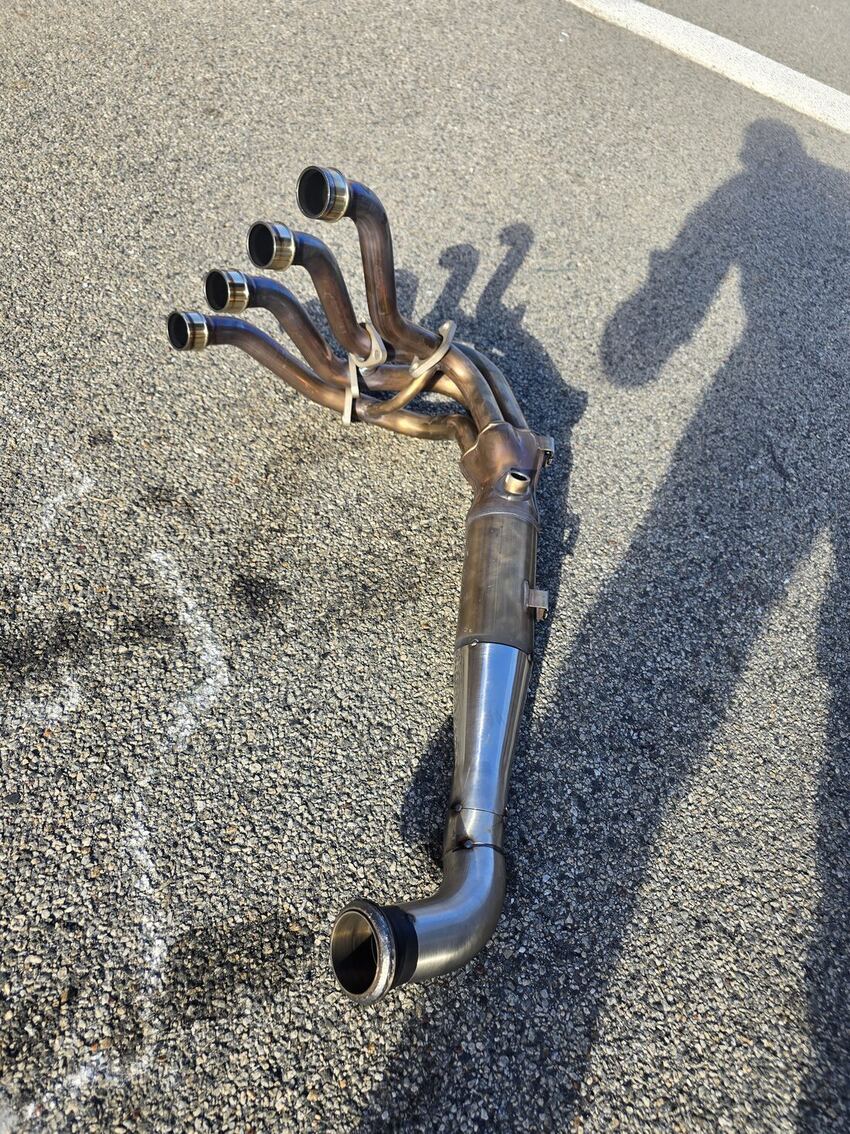
The 750SR-S is new enough that literally no aftermarket exhaust systems exist for it yet — full or slip-on. The customer had already bought and fitted an IXIL tail section hoping for more sound and a bit more life in the top end. Result: virtually no difference. Still quiet as a mouse. That's because the restriction wasn't the tail — it was the OEM "breadbox" mid-section sitting upstream of it, still choking everything down before it ever reached the muffler.
The build
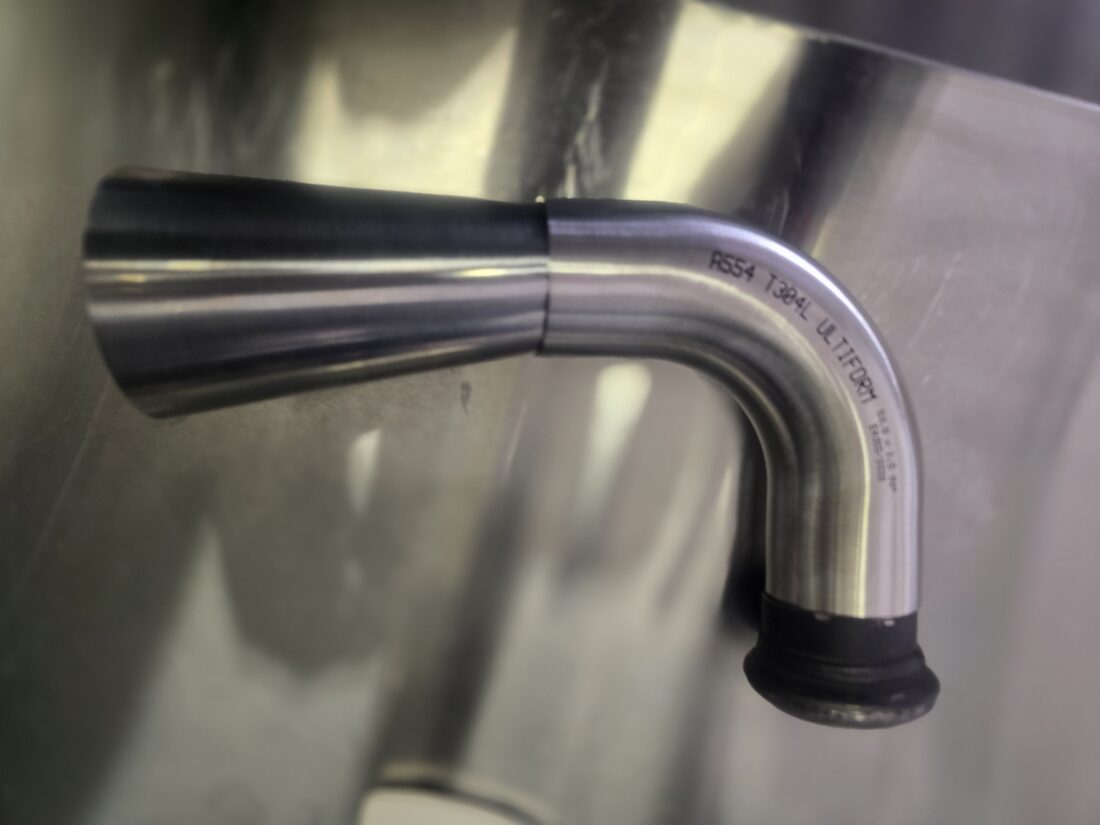
Since nothing off-the-shelf existed to fix it, we built one. We removed the stock breadbox and fabricated a custom taper section in its place — stepping smoothly from 75mm down to 50mm over about 180mm to properly feed into the existing tail section.
The taper matters more than it sounds. A sudden step-down — an instant reducer — creates turbulence right where you don't want it, disrupting cylinder scavenging and killing flow. A long, gradual taper keeps the gas flow attached and smooth the whole way through, which is what actually maximises flow and horsepower instead of just moving the restriction somewhere else.
The OEM header and catalytic converter stayed completely untouched — the bike is still fully emissions compliant. Because back pressure and air-fuel ratio were preserved by design rather than disrupted, there was no need for an ECU retune. That's the difference between a proper tune job and just cutting a hole in the pipe: get the flow engineering right, and you don't create the problem a remap is usually there to fix.
The result
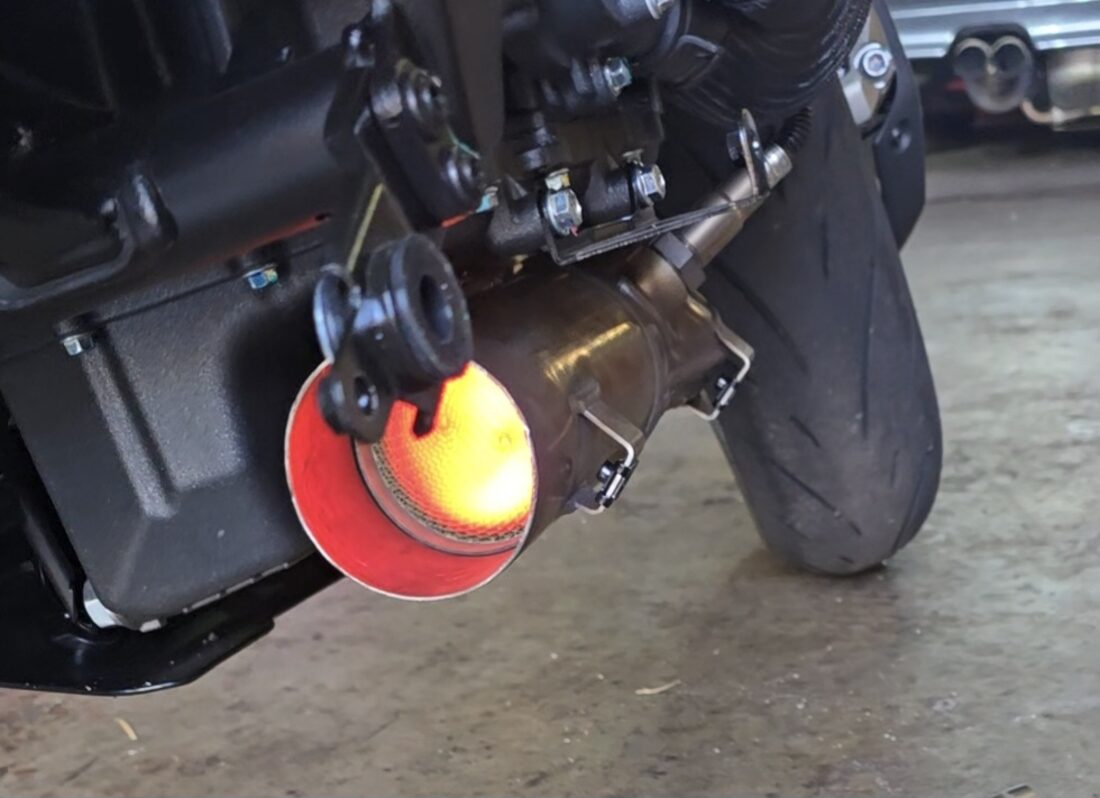
More bite in the sound, real gains higher in the rev range, low-end torque untouched, and a fully street-legal bike with the cat doing exactly what it's meant to. That orange glow in the photo below isn't a warning sign — that's the catalytic converter, positioned after the O2 sensor, working hard and still very much intact after a solid run.
Hear it: the finished CFMoto 750SR-S on the custom taper pipe.
 +
+
 +
+
 +
+
 +
+
 +
+
Ready to find your sound?
Whether you want a simple, street-legal acoustic upgrade or a full custom fabrication because nothing exists for your bike yet, we can work through the options with you — and build it properly if we need to.
Got an exhaust project in mind?
Call or WhatsApp us and tell us what you're riding — we'll talk through what's actually possible.